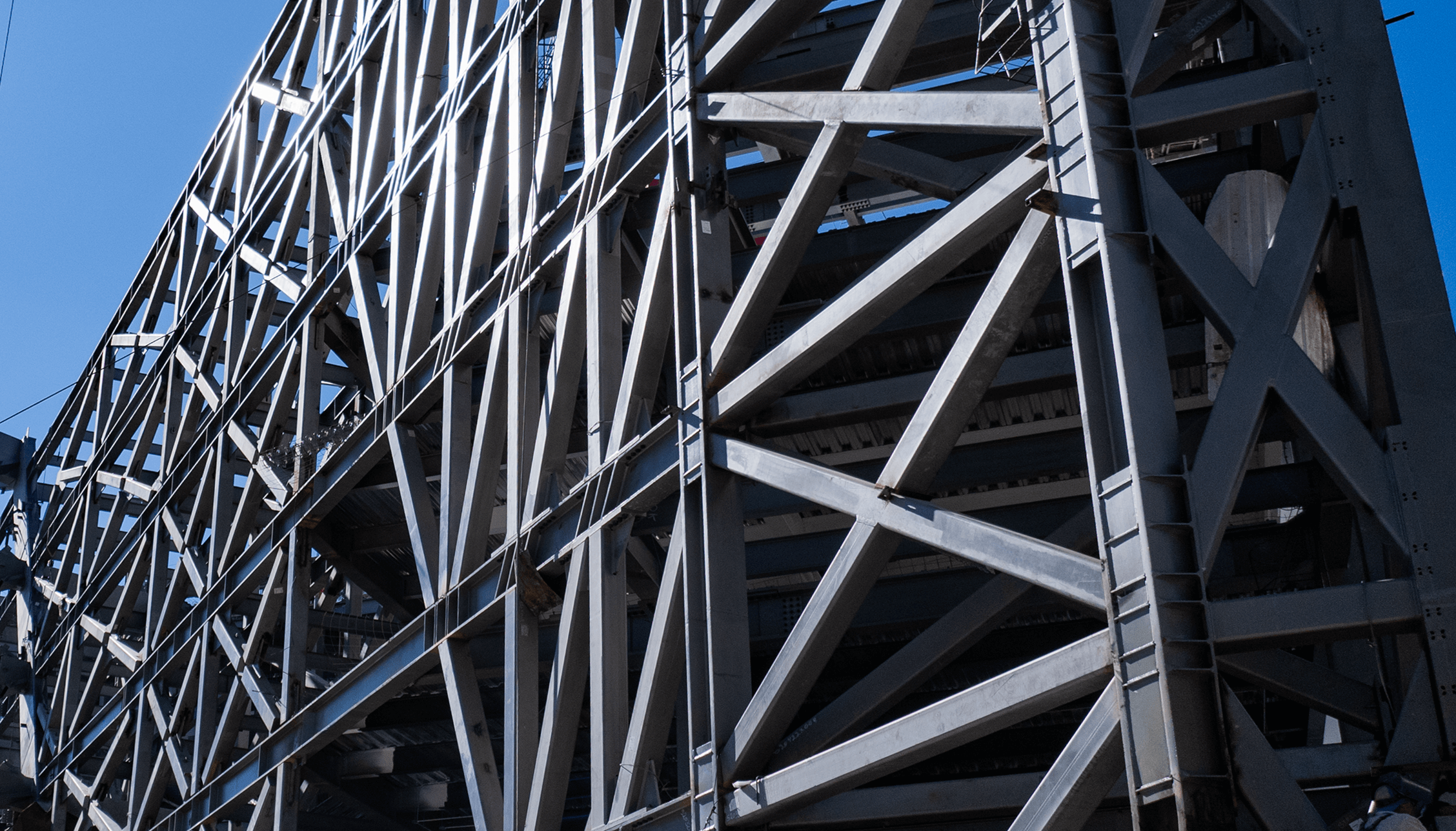
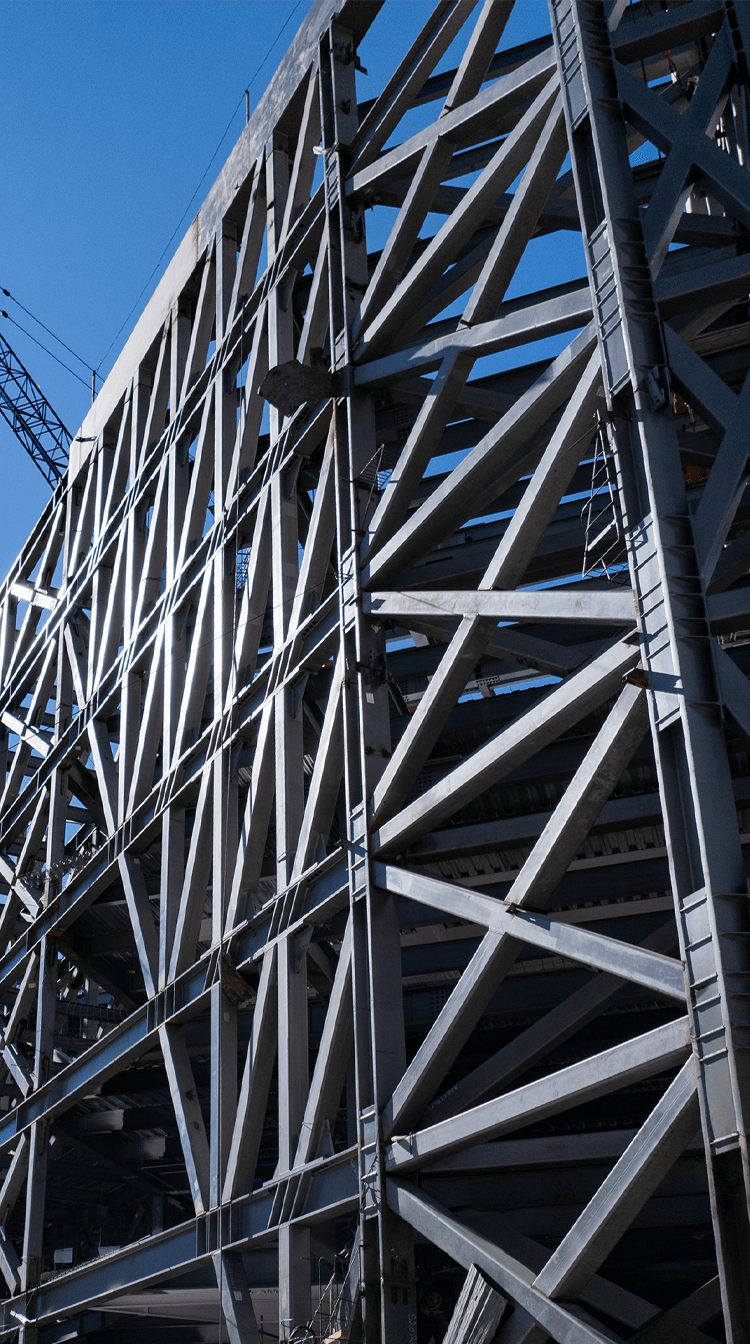
Steel bracing reinforcements for structures
In steel construction, tall buildings face constant lateral loads—from earthquakes and strong winds. For that reason, bracing (steel bracing) is essential for maintaining structural integrity. In this article, we explain what bracing is, how it works, and why it matters in modern steel structures.
Bracing is a structural system that uses steel members—typically diagonal elements—to resist lateral forces that can compromise a building’s stability. In other words, it helps distribute and absorb these loads, adding strength and stiffness to the frame.
These members are placed strategically and commonly form patterns such as X, K, or V. When wind or seismic forces act on the structure, the diagonals redirect those loads through the frame. As a result, the building limits excessive drift and improves overall stability.
Benefits of bracing
- Seismic Resistance: As a result, buildings can better withstand seismic forces and recover after an event.
- Structural Stability: In addition, bracing improves lateral stability without compromising architectural intent, enabling taller, more slender structures.
- Innovative Aesthetics: For example, bracing can be integrated in a stylized way, contributing to modern and elegant designs.
- Design Versatility: Ultimately, it supports many layouts and configurations, giving architects more freedom while preserving usable space.
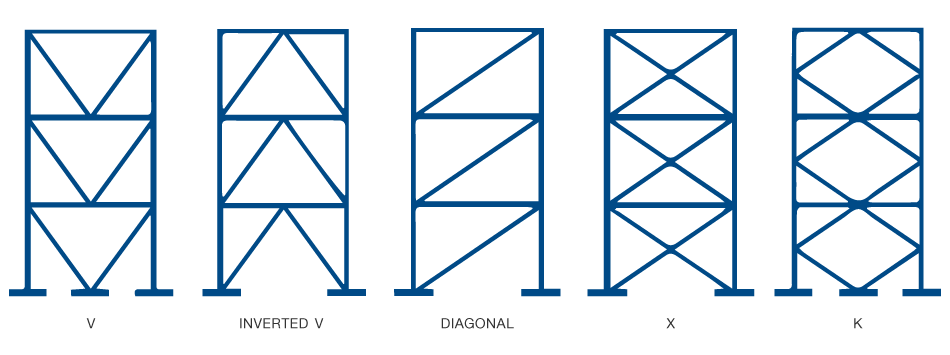
Common types of bracing
- V-Bracing: Steel elements form a “V” between floors or columns. With this layout, the structure gains effective lateral resistance and works well in open-plan areas where a clean, minimalist aesthetic is desired.
- Inverted V (Chevron) Bracing: Similar to V-bracing, but inverted. As a result, it delivers strong lateral resistance and can also support a distinctive architectural expression.
- Diagonal Bracing: Members are arranged diagonally between floors or columns to create the bracing system. Because it’s simple, it adapts easily to different structural configurations.
- X-Bracing: Two diagonals cross to form an “X.” By crossing the members, the system distributes lateral loads efficiently and adds stiffness and redundancy.
- K-Bracing: Members connect to form a “K” shape. In tall buildings, this configuration can increase horizontal stiffness where higher lateral resistance is required.
Iconic Recal Buildings, with their respective bracing systems.
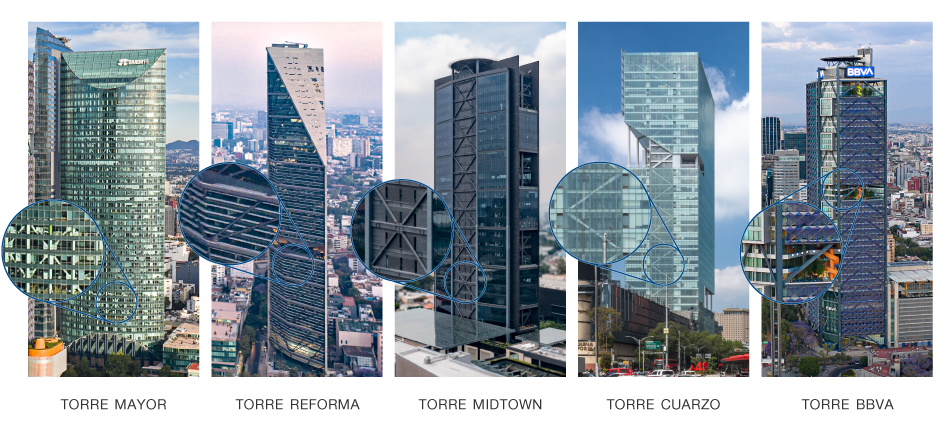
Click on any of these projects to view additional images:
In dense urban environments, stability is non-negotiable. Therefore, bracing helps buildings resist seismic demands and wind loads with confidence. Ultimately, its value comes from a simple idea: place steel members strategically to improve safety, performance, and design flexibility.