Architecturally Exposed Structural Steel
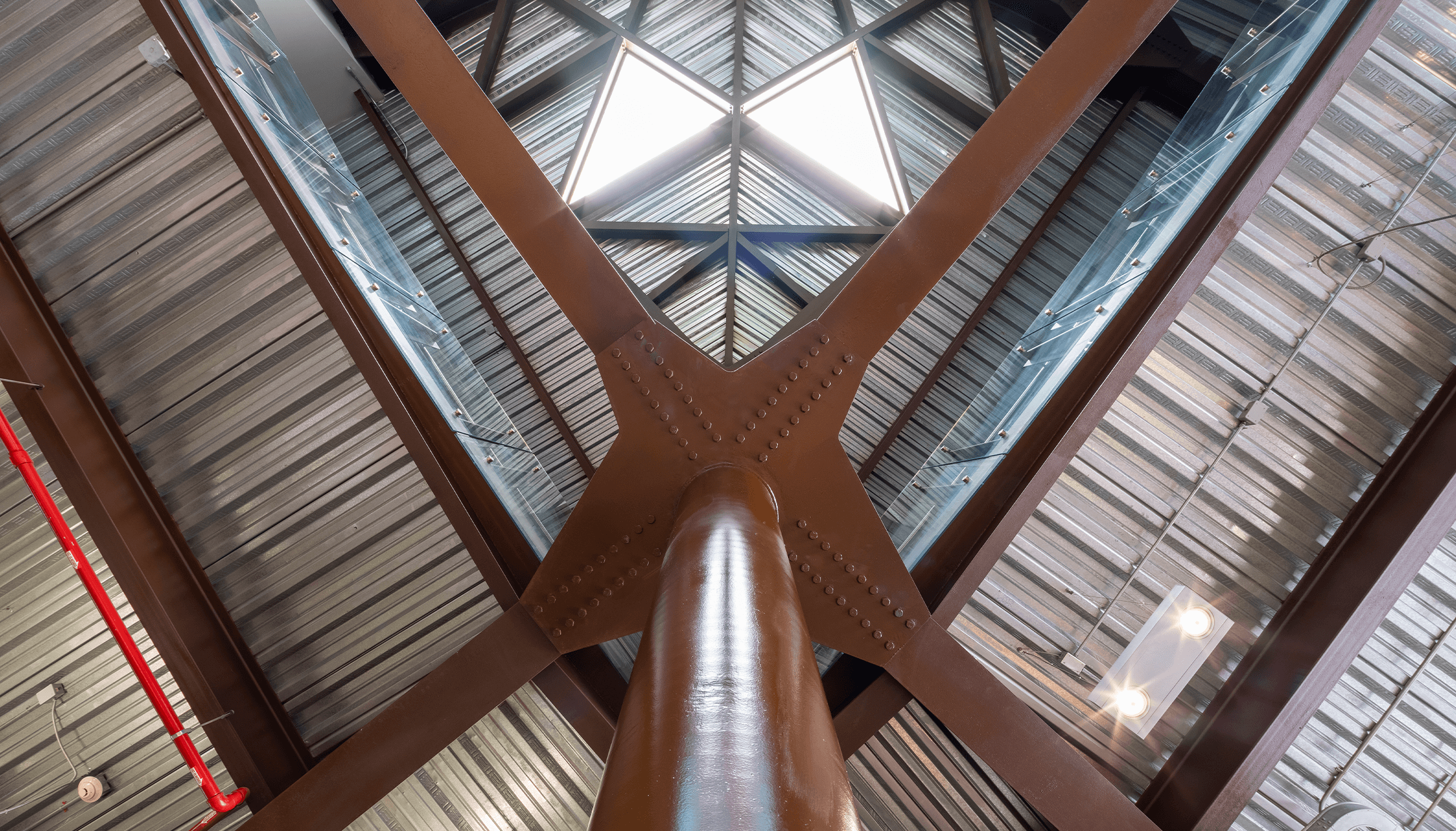
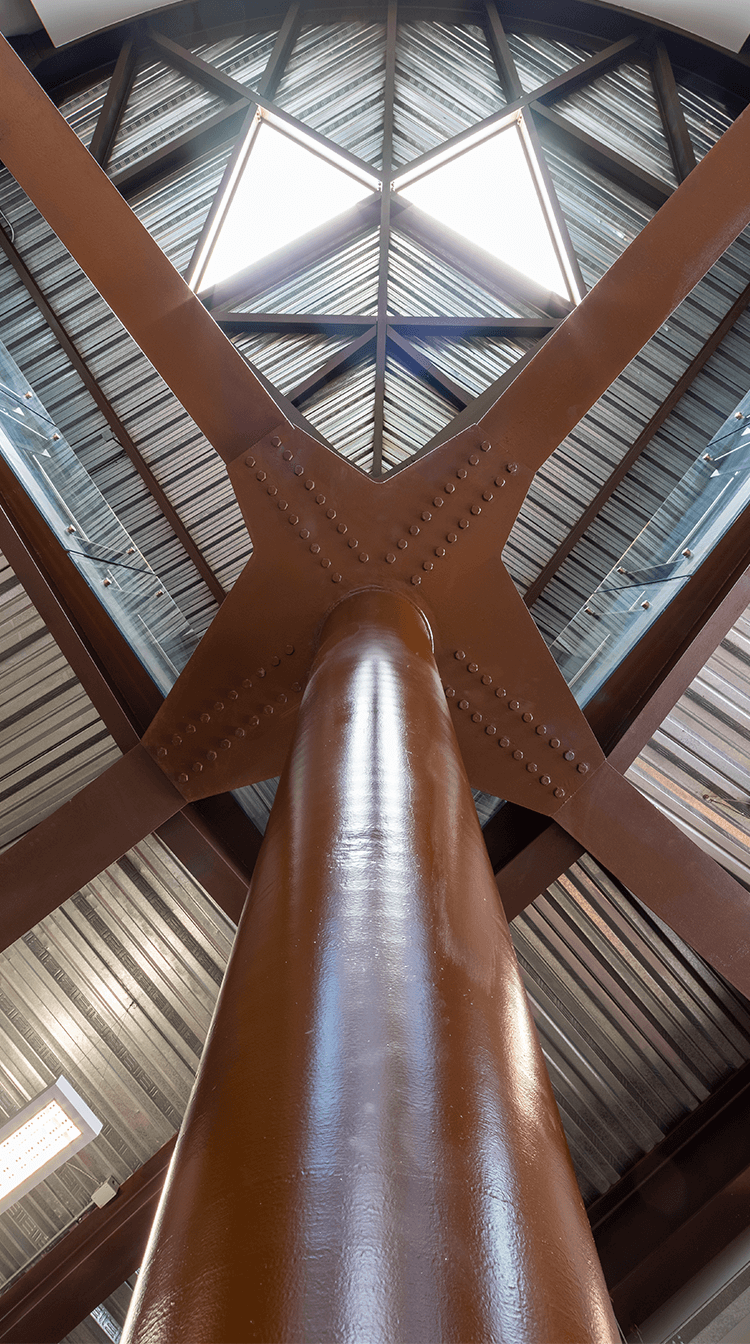
Architecturally exposed steel (AESS) has become a trend in contemporary architectural projects that aim for a modern and minimalist design. Thanks to the aesthetic and functional properties of steel, it’s possible to create visually stunning buildings. Structures can be fabricated in an unlimited range of shapes, curves, colors, and finishes.
To clarify AESS doesn’t aim to conceal steel behind layers of material but rather showcase it, making it a visible and essential part of a building’s aesthetic. Highlighting both the beauty and structural integrity from either the inside or outside.
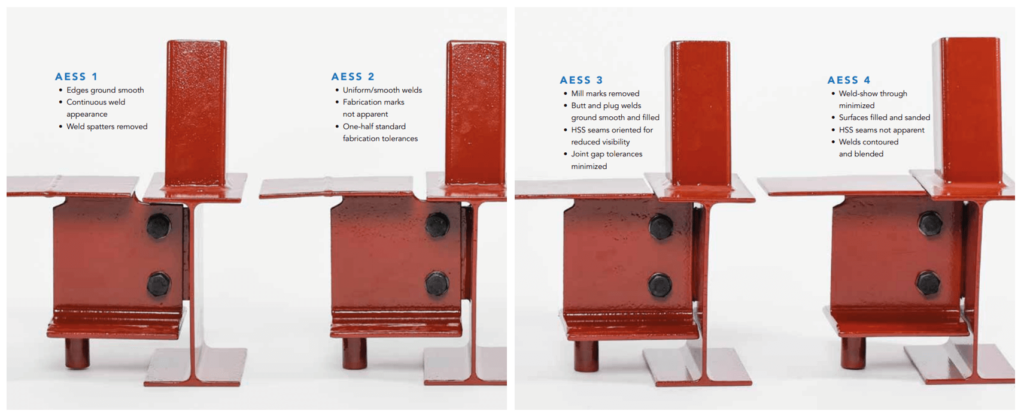
The category standards for Architecturally Exposed Structural Steel (AESS) according to the American Institute of Steel Construction (AISC)
The AISC has a special section for Architecturally Exposed Structural Steel (AESS), where it defines the different finishing specifications for each of the four categories. Therefore the AESS finishes of a project can be customized according to the desired effect in terms of gloss and texture.
Understanding the different categories of AESS is useful in architecture and structural engineering to ensure that all parties involved are in agreement regarding the expectations of quality and final appearance. Understanding the categories can help professionals accurately estimate costs and construction timelines related to finishing. This contributes to more efficient resource management and the prevention of delays and cost overruns.
AESS Categories:
Category 1 of AESS
Attention to detail and functionality are prioritized with smooth edgesin order to achieve a clean and uniform finish. Welds have a seamless appearance, representing precision and structural integrity. Additionally, any welding spatter is meticulously removed, maintaining a polished and refined look. This level allows for a more rustic yet intentional aesthetic, aligned with structural needs and embracing visible imperfections, but carefully managed.
Category 2 of AESS
Welds exhibit uniformity and smoothness, without visible manufacturing marks. Precision is high, maintaining manufacturing tolerances at half the standard level. This level ensures a refined finish, where structural elements feature impeccable welds and a clean appearance, maintaining a high level of precision and aesthetics.
Category 3 of AESS
Meticulous attention to detail is given. Manufacturing marks are completely eliminated, ensuring a polished surface. Butt and plug welds are expertly smoothed and filled, enhancing the overall appearance. Hollow structural section (HSS) seams are strategically oriented for minimal visibility, contributing to a seamless look. Additionally, joint clearances are minimized, emphasizing precision and flawless finish.
Category 4 of AESS
Achieves a flawless finish. Weld visibility is significantly minimized, offering nearly invisible welds. Surfaces are meticulously filled and sanded, ensuring a perfectly smooth appearance. Hollow structural section (HSS) seams are completely concealed, providing a seamless surface. Welds are expertly contoured and blended, achieving a level of refinement where structural elements appear nearly perfect and aesthetically refined.
AESS offers a new dimension in modern architecture by combining functionality and aesthetics in exposed structural steel. From prioritizing functionality to aesthetic perfection, AESS categories open a world of possibilities for designers and builders in creating truly exceptional structures.
For more information on how you can take your project to the next level, don’t hesitate to contact us at corporativo@recalglobal.com
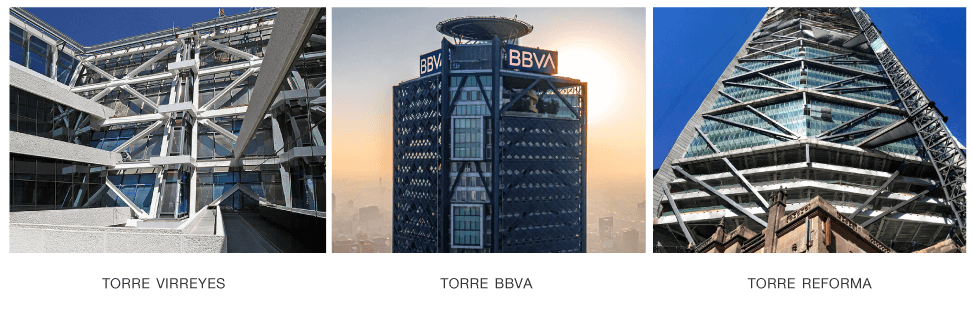
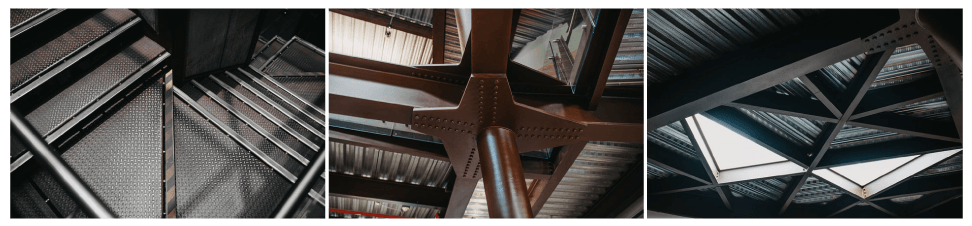
Recal project examples with AESS:
Source: https://www.aisc.org/why-steel/architecturally-exposed-structural-steel/