How Is Oversized Structural Steel Transported?
Oversized structural steel transportation involves much more than simply loading a piece onto a trailer and sending it to the jobsite. Each shipment requires careful planning for lifting, positioning, support, and load securement to ensure the structure can be transported safely and efficiently while complying with applicable national and international transportation regulations.
In practical terms, transporting oversized structural steel carries a significant level of responsibility for everyone involved in the operation.
Shipping Plan for Oversized Structural Steel
1. Weight, Dimensions, and Center of Gravity Analysis
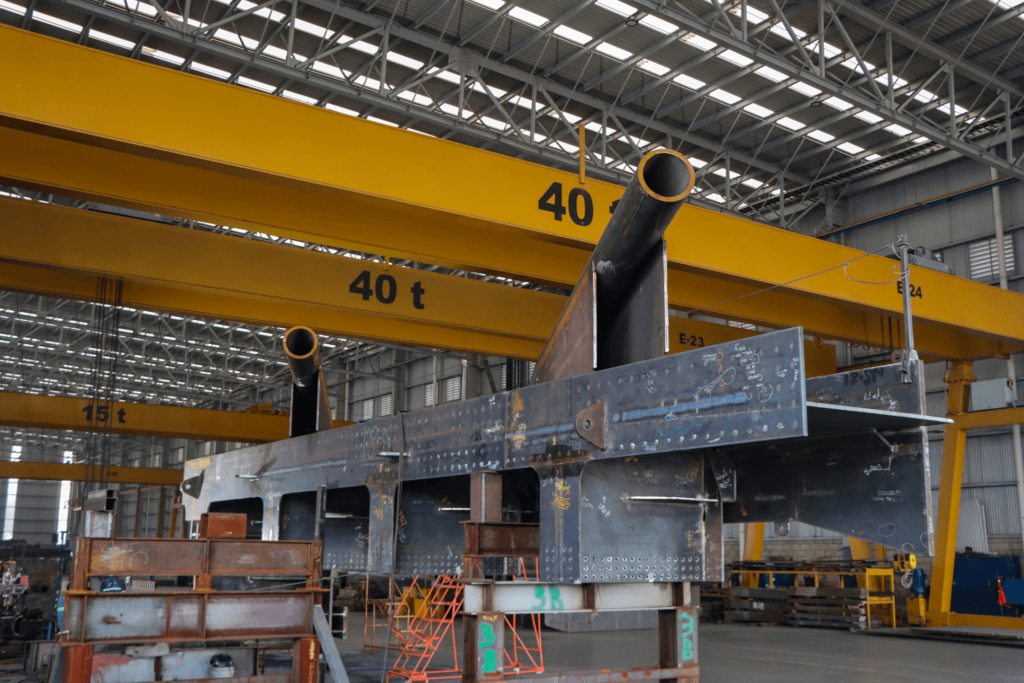
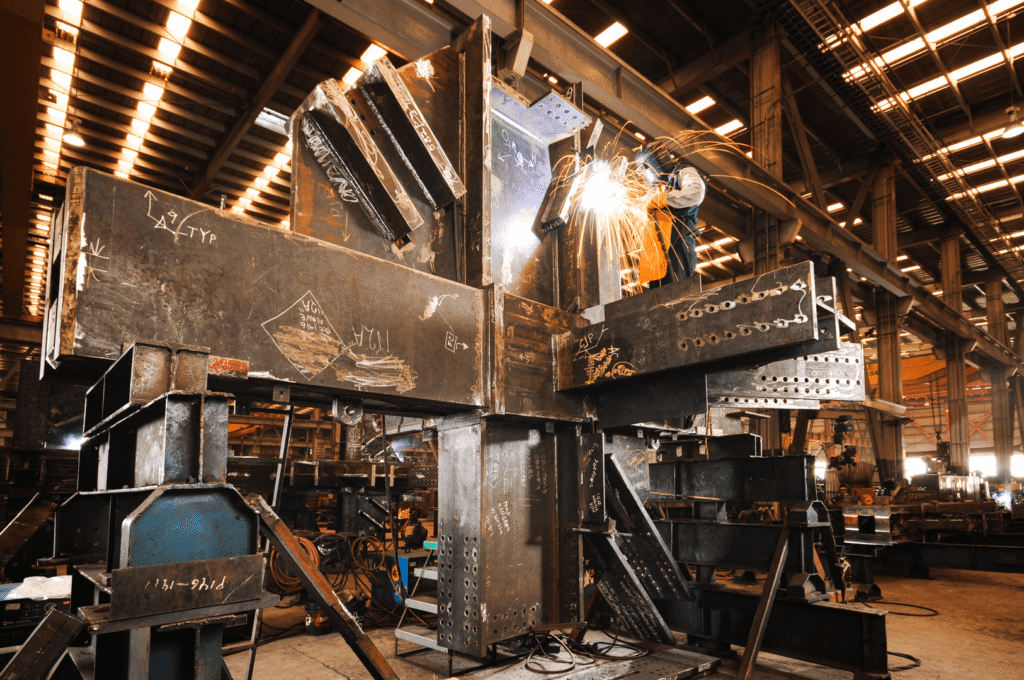
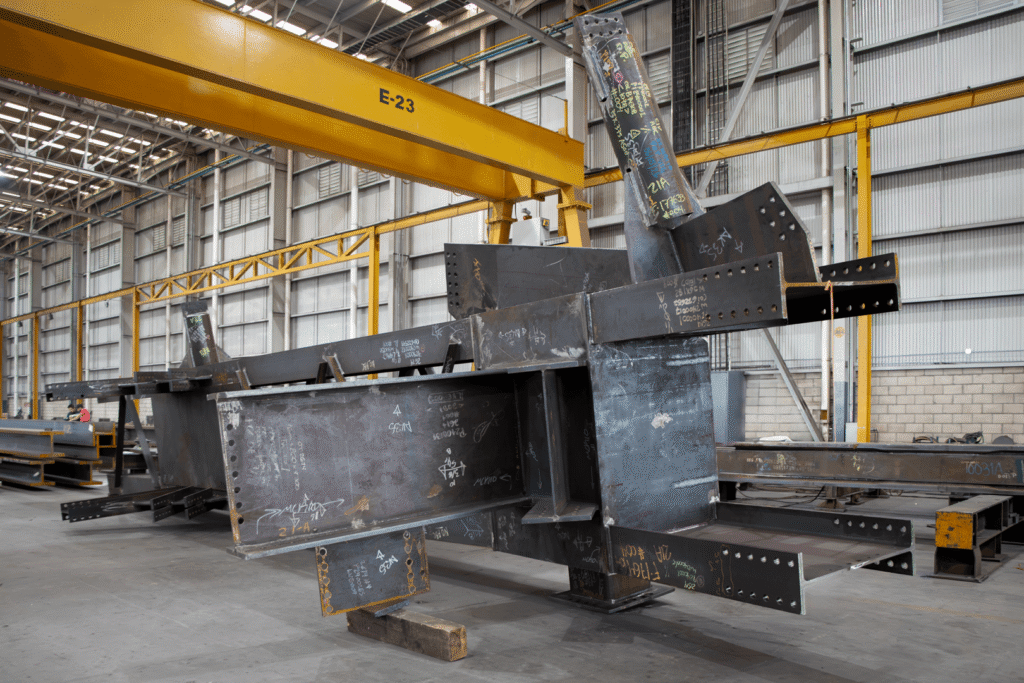
The process begins by identifying the structural steel pieces that will make up each shipment. Their weight, dimensions, geometry, and center of gravity are analyzed, as these factors are essential for determining the appropriate transportation equipment, lifting procedure and crane requirements, as well as how each piece should be positioned on the trailer.
2. Selecting the Right Transportation Equipment
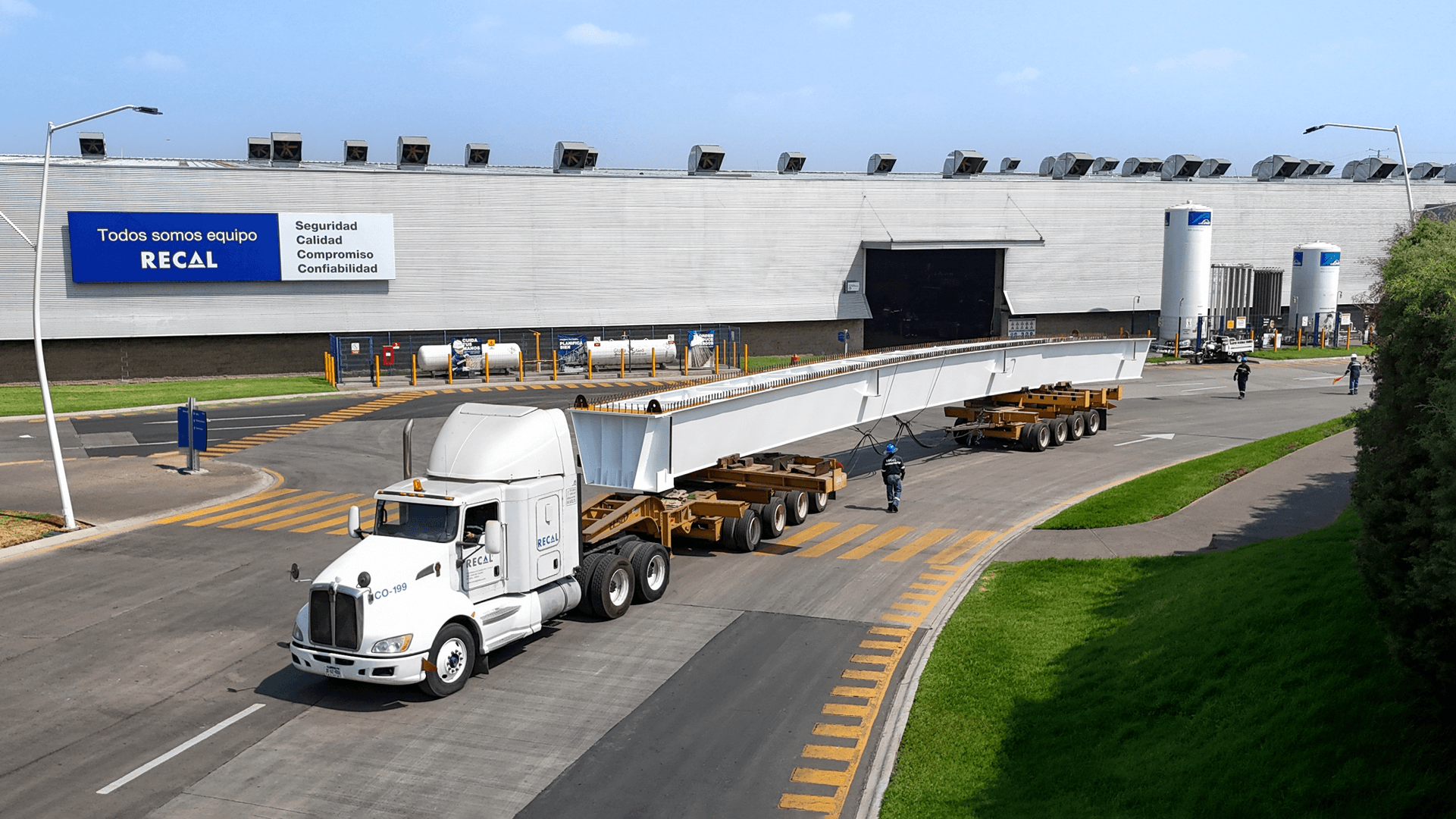
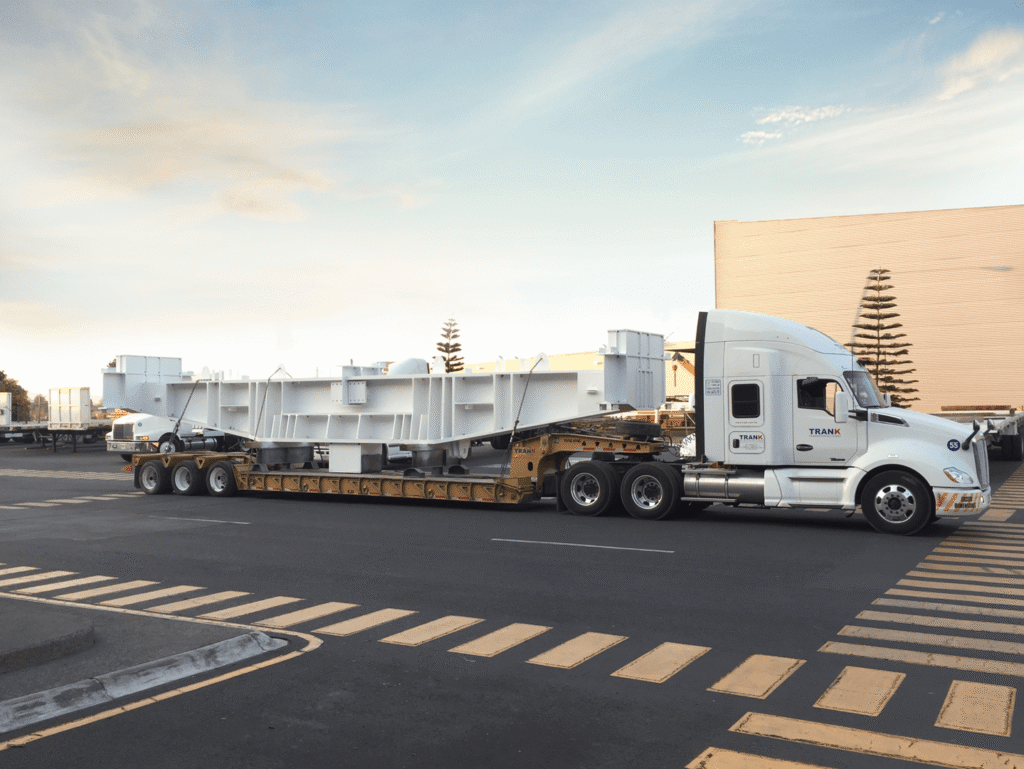
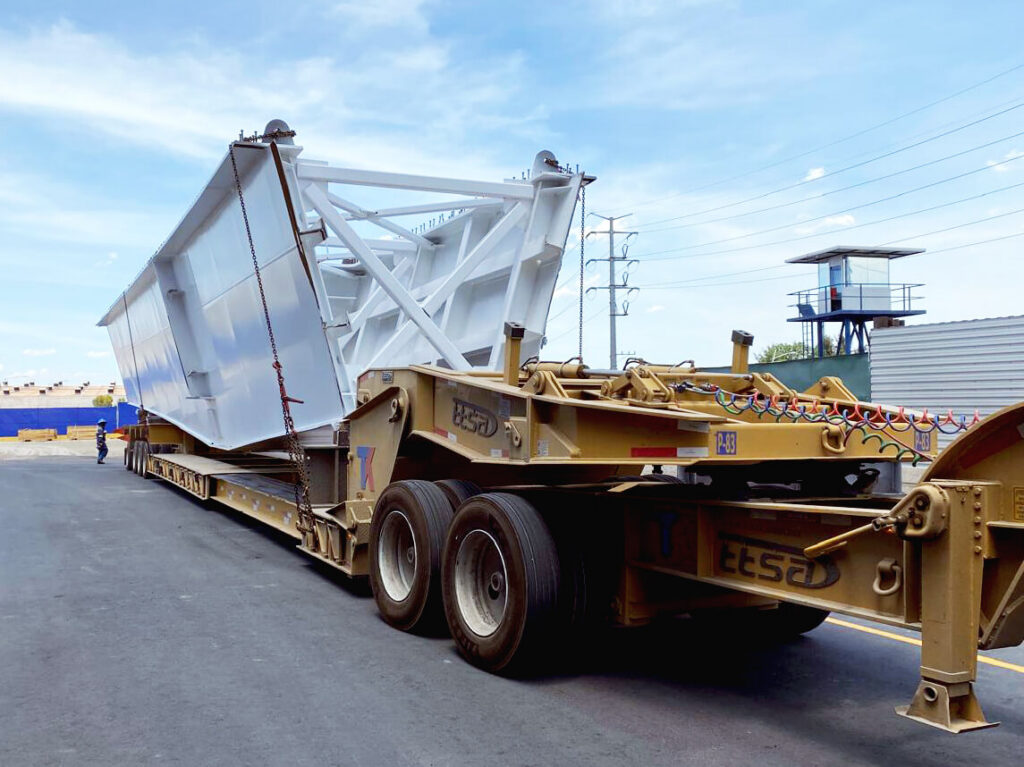
Once the load has been analyzed, the appropriate transportation equipment must be selected.Depending on the dimensions, weight, and configuration of the piece or group of pieces being moved, transportation options may include three- or multi-axle trailers, extendable trailers, step-deck trailers, semi-lowboy or lowboy trailers, modular transport systems, or even rail transportation.

3. Dunnage, Supports, and Load Stability
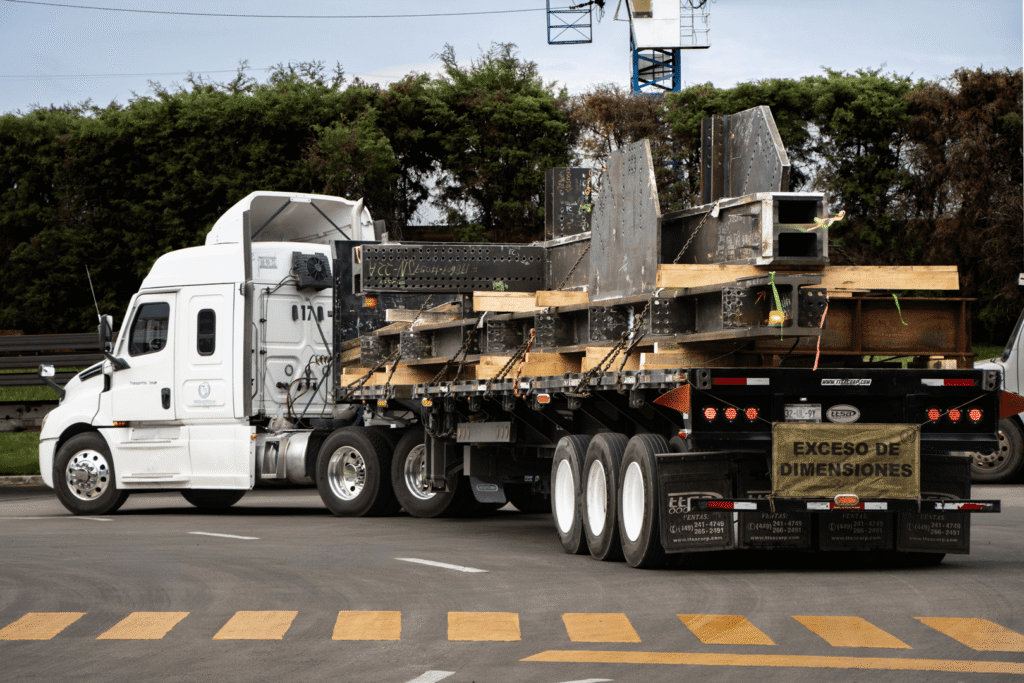
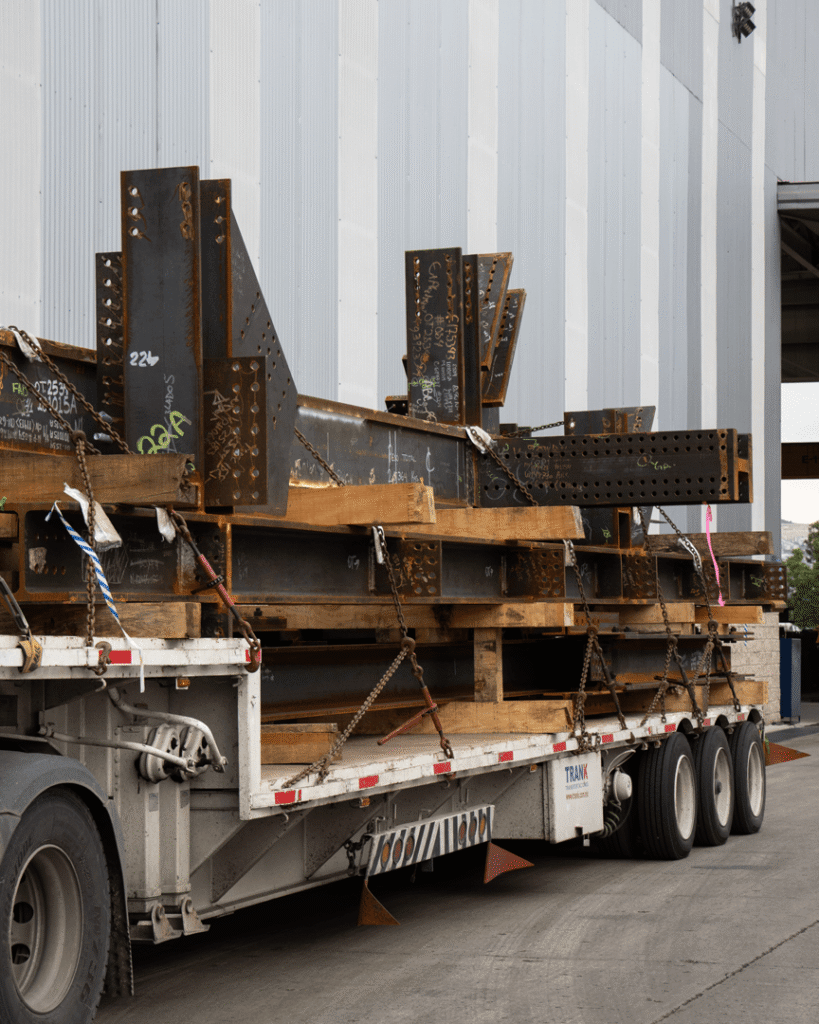
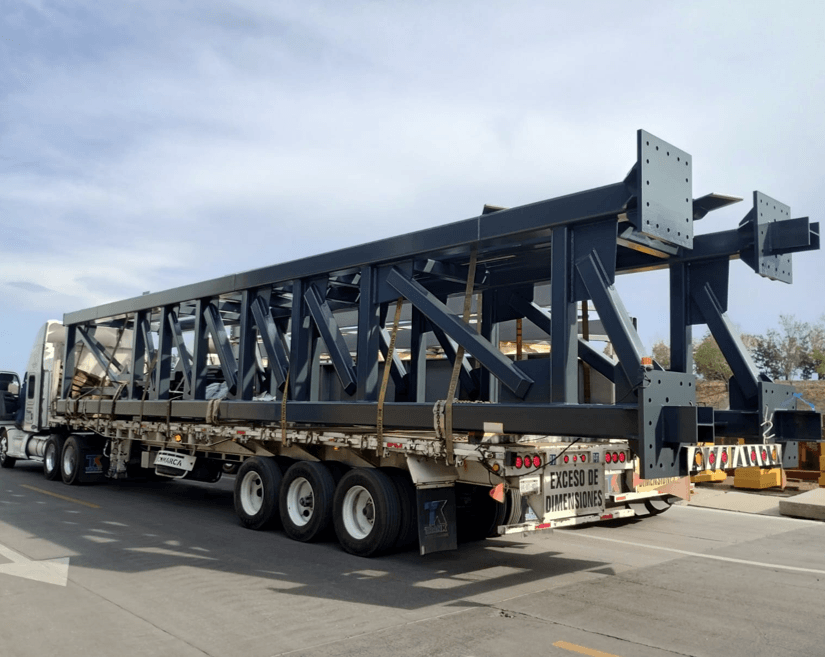
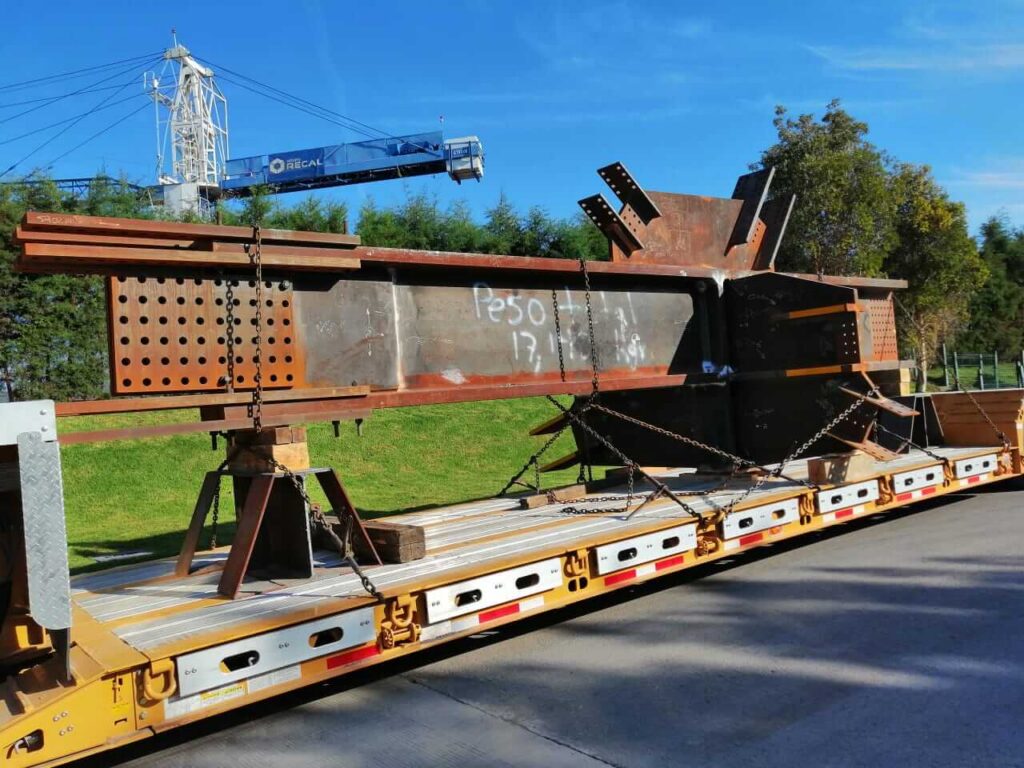
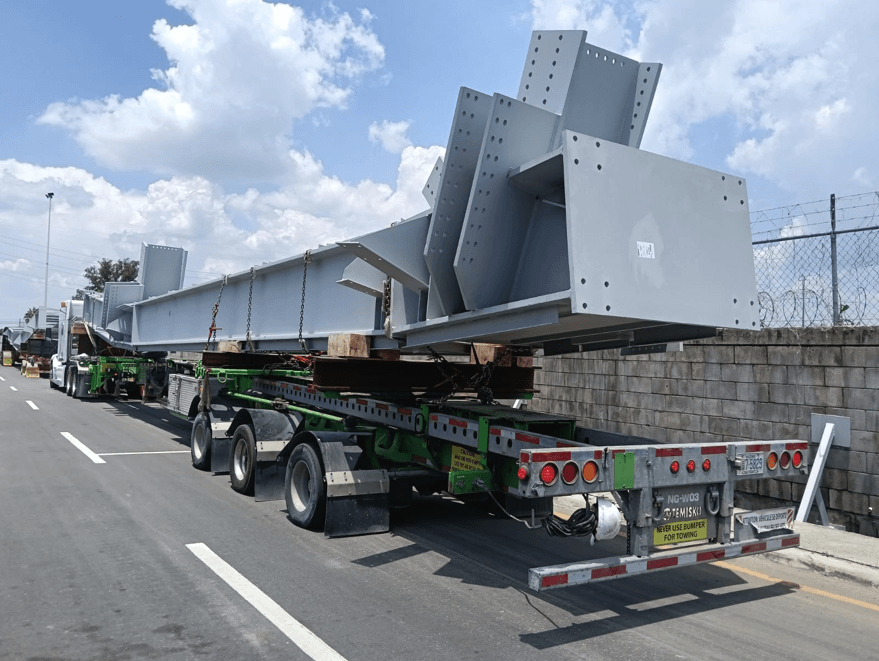
Once the structure is positioned on the trailer, its stability during transportation depends largely on how the support system is designed and arranged. This may include the trailer bed, auxiliary support elements, timber blocking or dunnage, and, when required, diagonal bracing to help maintain the piece in a stable and properly balanced position throughout transit.
4. Load Securement and Protection
The next step is securing the load. Depending on the shipment configuration, chains, slings, wire-rope slings, and other securement systems may be used.
Contact points must also be protected to prevent damage caused by friction, localized pressure, or impact to the surface or protective coating.
This is important for both painted and unpainted structural steel. Improper contact can damage surfaces, edges, or coatings during transportation. For this reason, edge protectors and other protective materials are placed at sensitive contact points so that the structure not only reaches its destination, but arrives in the condition required by the project.
It is not enough for the structure to simply remain on the trailer. It must be securely and stably positioned without creating undesirable contact points or unintended stresses during transit.
5. Route Planning and Assessment
Before transporting an oversized structural steel load, a route survey may be required to identify potential restrictions and determine the most suitable route.
Factors that may need to be evaluated include toll plazas, one- or two-lane roads, traffic conditions, bridge load restrictions, clearances, travel schedules, and other conditions that could affect the shipment. All transportation must comply with the applicable local, national, or international regulations.
Another important consideration is obtaining the permits required to transport an oversized load. Depending on the route, these may include local, state, federal, and/or international permits.
These permits are generally coordinated by the carrier based on the load’s width, length, height, weight, and other special requirements. Processing times and costs may vary depending on the state, region, or country involved.
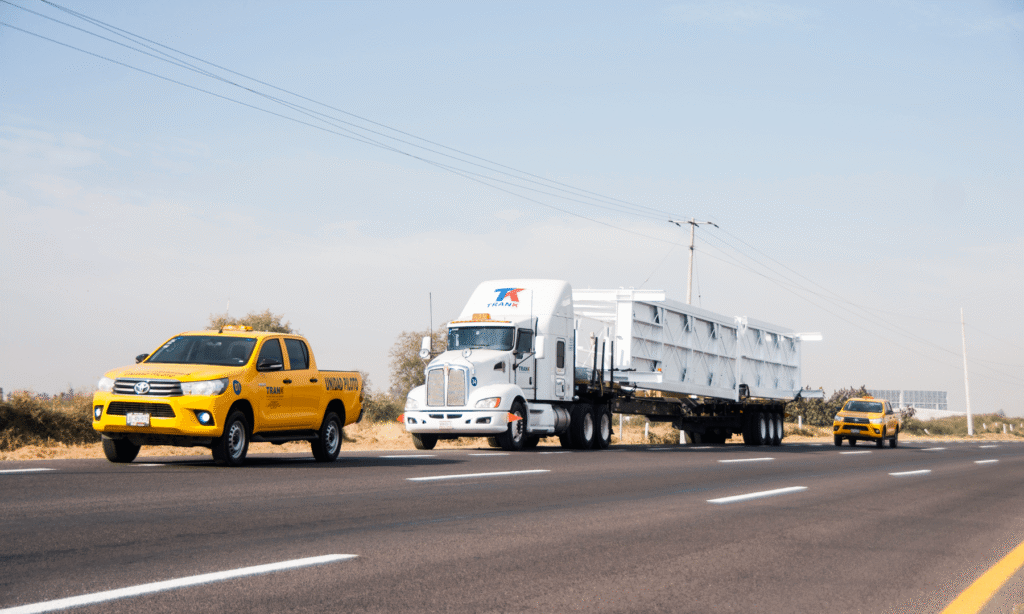
Depending on the dimensions of the load and applicable regulations, one, two, or several pilot or escort vehicles may also be required to accompany the transport unit.
Finally, requirements at the destination must also be considered. These may include restricted entry hours for cities or jobsites, advance coordination of unloading operations and lifting equipment, and any required local transportation permits.


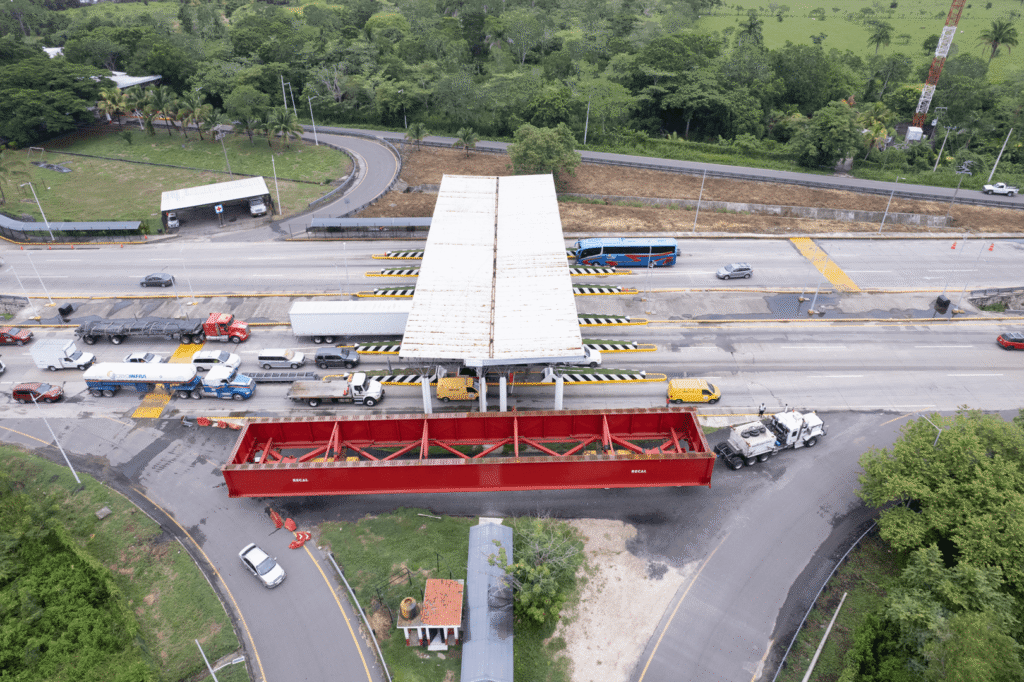

More Than Moving a Piece: Defining How It Should Travel
Transporting oversized structural steel requires planning from the moment a piece leaves the fabrication plant until it reaches the jobsite.
A well-developed shipping plan helps preserve the integrity of the structure, comply with transportation requirements, and facilitate unloading and erection at the final destination.